
Building Resilience for Starting School: The Step from Preschool to Kindergarten
Quick answer: Resilience is a child’s ability to cope with challenges, setbacks and change, and then try again. It is one of the strongest foundations for settling into Kindergarten, often more important than early reading or writing. Children build it in preschool through everyday practice: taking turns, solving problems, naming feelings and managing their own belongings.
Key points
- Resilience is learned. It is not a fixed personality trait.
- Preschool is the stepping stone where children practise school skills while the stakes are low.
- Coping skills often matter more on Day 1 than academic skills.
- Families can build resilience at home through small, everyday habits.
- In NSW, early childhood services share each child’s strengths with their new school through the Transition to School Digital Statement.
What is resilience in a preschool child?
In a four or five year old, resilience is the ability to manage frustration, disappointment and change, and to recover. It usually looks like:
- trying again after something does not work
- asking for help, and knowing who to ask
- coping with a change in routine
- naming feelings: “I’m frustrated”, “I’m worried”, “I miss Mum”
- joining a game that has already started
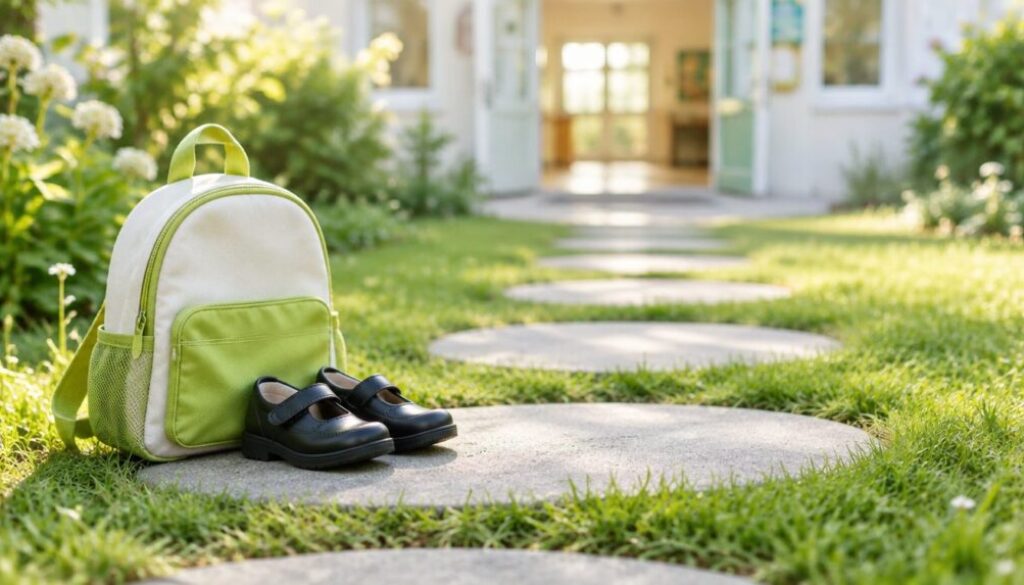
- looking after their own bag, hat, lunchbox and water bottle
In Australia’s national Early Years Learning Framework (EYLF V2.0), this sits within Learning Outcome 3: Children have a strong sense of wellbeing.
Why does resilience matter more than academics when starting school?
Kindergarten asks a lot of a five year old all at once: a new building, new adults, bigger groups, longer days and fewer chances for one-on-one help. Children who can cope with those changes are free to learn. Children who cannot are often too unsettled to take much in.
After more than 30 years in early childhood education, I have found that the children who settle best are usually not the ones who can already write their name. They are the ones who can cope when something does not go their way.
How does preschool prepare children for Kindergarten?
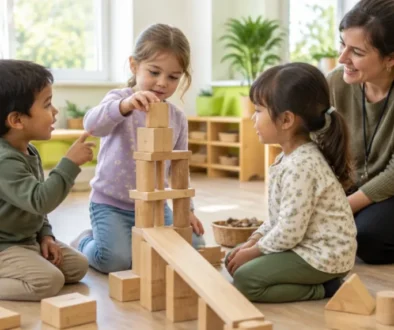
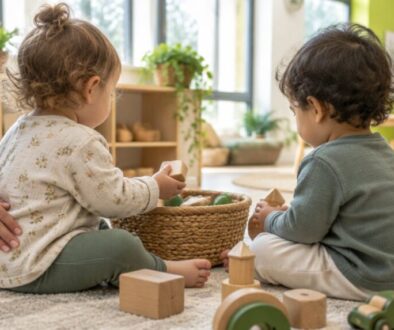
Preschool is the stepping stone between home and school. Children practise school skills such as waiting, sharing, following routines and solving problems with friends, in a familiar place with educators who know them well.
By the time they walk into a Kindergarten classroom, many of the skills school will ask of them have already been tried, and sometimes failed, somewhere they feel safe and secure.
How does MJEEC support the transition to school?
In our Preschool 2 room for children aged 4 to 5, we plan for resilience on purpose:
- Children’s voices shape the program. We ask children what they think and how they would solve problems, and we build their ideas into what we plan.
- Real responsibility. Children pack away, serve themselves, manage their belongings and help younger friends.
- Feelings are named, not rushed. Educators help children put words to big emotions and work through them.
- Knowing who to tell. Through our body safety program, children practise naming the trusted adults they would go to if they were worried.
- A proper handover to school. We complete the NSW Department of Education’s Transition to School Digital Statement for each child, so their Kindergarten teacher knows their strengths and interests from the first day.
Thinking about preschool for next year? Read Preschool in Maroubra for 2027: What Changes, What It Costs and When to Enrol.
What can parents do to build resilience before school starts?
- Pause before helping. “Have a go first, and I’m here if you need me.”
- Practise school routines. Open the real lunchbox, unwrap food, wear the school hat and use an unfamiliar bathroom.
- Talk about school positively. Focus on friends, play and the library, not “you’ll have to sit still.”
- Share your own feelings. “I was nervous on my first day too, and it got easier.”
- Go to every orientation session the school offers. Familiar faces and places take much of the fear out of Day 1.
- Keep goodbyes short and warm. See our post My child cries at drop off. Will it get better?
- Expect a few wobbles. Tiredness and tears in the first weeks of Term 1 are a normal part of adjusting.
Frequently asked questions
When can my child start Kindergarten in NSW?
Children can start Kindergarten at the beginning of the school year if they turn five on or before 31 July that year. All children in NSW must be enrolled in school by their sixth birthday. (Source: NSW Department of Education, Starting Kindergarten FAQs.)
What is the Transition to School Digital Statement?
It is a NSW Department of Education report, written by your child’s early childhood educator, that tells their new school about their strengths, interests and how best to support them. Families can add their own input.
Is it normal for my child to struggle in the first weeks of Kindergarten?
Yes. Many children are tired, emotional or unsettled in the first weeks of Term 1. If it continues beyond the first term, talk with their teacher.
Should I hold my child back a year?
It depends on the child. Ask your child’s preschool educators what they are seeing in a group setting, as they can tell you how your child copes with routines, friendships and change. Our guide Is My Child Ready for School? covers the signs to look for.
Does MJEEC offer preschool for children starting school in Maroubra?
Yes. Maroubra Junction Early Education Centre runs two preschool rooms, for children aged 3 to 4 and 4 to 5, at Level 1, 142 Maroubra Road, Maroubra NSW 2035. We welcome families from Maroubra, Randwick, Kingsford, Matraville and across the Eastern Suburbs.
Sources and further reading
- Transition to School Digital Statement – NSW Department of Education
- Starting Kindergarten FAQs – NSW Department of Education
- Resilience: how to build it in children 3–8 years – Raising Children Network
- Approved learning frameworks (EYLF V2.0) – ACECQA
About the author: Lauren Ziegler is the Director and Nominated Supervisor of Maroubra Junction Early Education Centre, a privately owned long day care and preschool in Maroubra since 2010. She holds a Bachelor of Education (Early Childhood) and has more than 30 years’ experience in early childhood education.